Forrest Mallard
- March 5, 2025A Hooded Phantom in Budapest’s City Park
There are places in the world that don’t just tell a story; they breathe it. Budapest has plenty—cobbled streets whispering of revolutions, ruin bars still smelling of cold war paranoia, grand baths that have seen the same rituals for centuries. But then, there’s the Statue of Anonymous Budapest, a shadowed figure tucked away in the courtyard of Vajdahunyad Castle. It doesn’t whisper; it stares; it waits.
A hooded, faceless specter gripping a quill, this is not just another piece of tourist bait. This is a tribute to the medieval chronicler who wrote Gesta Hungarorum, the first great history of the Hungarian people. He documented conquest, kings, blood, and legend—and yet, his name was lost to time. The ironies stack up. A man who immortalized a nation remains nameless himself.
Gesta Hungarorum – Full Latin Text with English Translation
Who Was Anonymous? The Chronicler Without a Face

The truth? No one knows exactly. But speculation makes it fun. Most scholars believe Anonymous was the notary of King Béla III, a high-ranking scribe who had access to court records and national lore. His magnum opus, Gesta Hungarorum, written around 1200, tells the story of Hungary’s foundation, tracing the Magyars’ arrival into the Carpathian Basin.
Wikipedia: Anonymus (Notary of Béla III)
His name, if he ever signed it, has been swallowed by history. All that remains is a cryptic introduction in Latin: “P. dictus magister, sive Anonymus.”
Just a single letter. A hint of a man whose words outlived him.
Vajdahunyad Castle: The Perfect Setting for a Legend
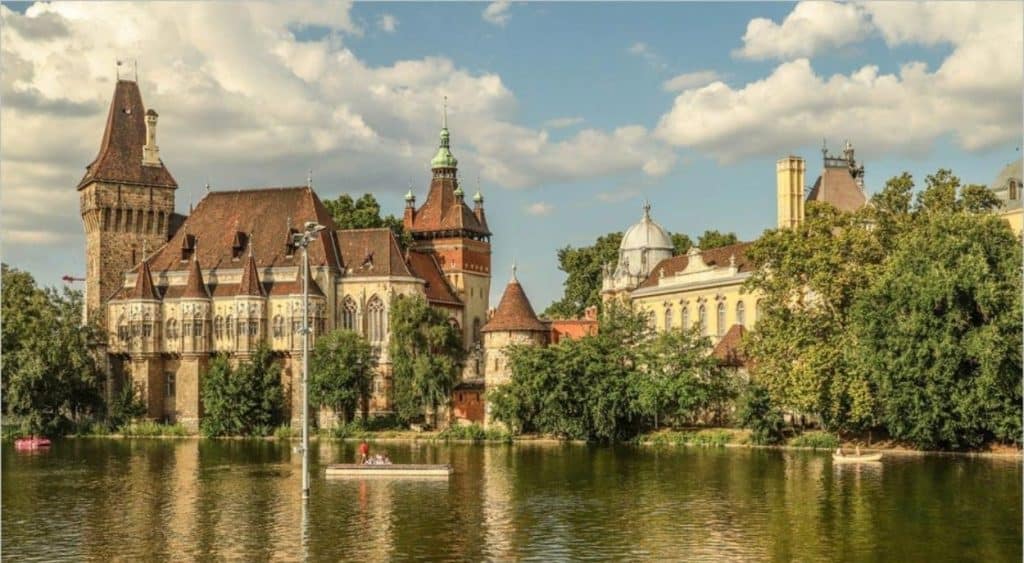
This statue isn’t just anywhere. It broods within Vajdahunyad Castle, an architectural fever dream plucked from a medieval fantasy. A replica of a Transylvanian fortress, the castle is a fusion of Romanesque, Gothic, and Baroque styles, designed in 1896 for Hungary’s Millennial Exhibition.
As you step into the courtyard, the statue emerges from the mist like a ghostly scribe, a presence both ancient and unshakable. Writers, artists, and history nerds flock here, drawn by the myth that touching the quill brings inspiration. Whether that’s true or just a great way to smudge a century of patina, who knows? But in a city where history breathes through every stone, why not believe?
The Mystery of the Missing Face

Most statues depict their subjects with pride—chiseled jaws, commanding stares. But the Anonymous statue in Budapest hides behind a deep hood. His face? A blank void.
The Role of Chroniclers in Medieval Europe
Ligeti Miklós, the sculptor behind this masterpiece, understood something about power. When you strip a man of his identity, he becomes something more—an idea, a legend. The absence of a face invites imagination. Was he young or old? Did he live in splendor or squalor? The hood ensures we never know. And that is what makes him unforgettable.
The Quill of Inspiration: A Literary Pilgrimage
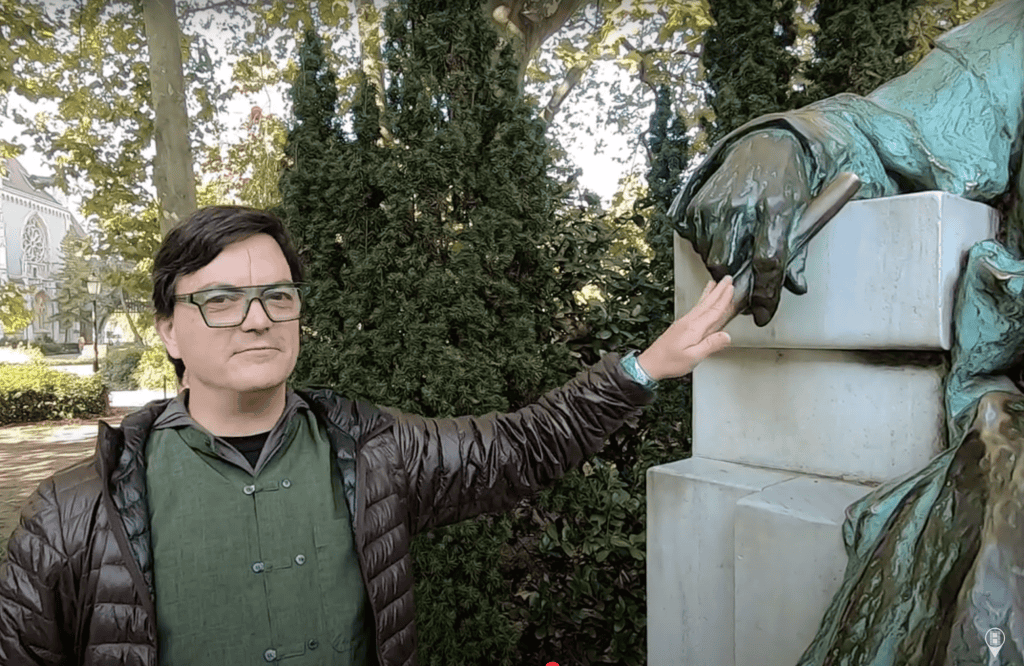
Superstition runs deep in Hungary, and this statue is no exception. Legend has it that if you touch the quill, you’ll be blessed with creativity—whether you’re a novelist, a poet, or just trying to write a decent email without sounding like a corporate drone.

Writers and dreamers come here, tracing their fingers over the cold bronze, hoping a little medieval magic rubs off. It’s a pilgrimage of sorts, though unlike Santiago de Compostela, there’s no grand cathedral at the end—just an old, hooded ghost who’s seen it all before.
A Statue in the Shadows of Cinema
The Statue of Anonymous Budapest has even had a brush with Hollywood. In the 1990 film Daughter of Darkness, the statue makes a fleeting appearance, adding an eerie backdrop to a horror-thriller. Not the most glamorous credit, but fitting for a figure built on mystery.

Hungary’s Relationship with Legends and Ghosts
Hungary has a strange and wonderful relationship with its ghosts. From Vlad the Impaler’s shadow in Transylvania to the cryptic Turul bird of Hungarian mythology, the country thrives on legend.

The Anonymous statue in Budapest is part of that tradition. A nameless historian remembered through a nameless figure. A paradox. A tribute. A challenge to those who stand before it—what stories will you leave behind?
Why You Need to Visit the Statue of Anonymous Budapest
- It’s a literary shrine. History buffs and writers alike come here to pay respects to a man who shaped Hungary’s national story.
- The location is cinematic. Vajdahunyad Castle looks like something out of Game of Thrones, and the statue only adds to the atmosphere.
- The mystery is tangible. You won’t find many monuments that honor someone without a name. That alone makes it worth the visit.
- You might just get inspired. Touch the quill. Maybe your next great idea is lurking just beneath the surface.
Final Thoughts: A Silent Reminder of Time
The Statue of Anonymous Budapest is more than just a piece of bronze in a city full of monuments. It’s a statement about the power of words, the fragility of identity, and the way history remembers—or forgets—those who write it.
Famous Writers’ Statues Around the World
Next time you find yourself in Budapest, take a detour through City Park. Stand before the hooded figure, let the weight of the past settle in, and ask yourself—what would you write if you knew your name would one day be erased?
Comments

Meet the Head Tramp
Forrest Mallard is a travel writer, filmmaker, and adventure guide who has dedicated his life to exploring the world and sharing its stories. With over 50 countries deeply explored, his blog, Tramposaurus Treks, has become a trusted resource for adventurers, even earning recommendations from national tourism boards.
Forrest’s storytelling spans multiple mediums, from documentary filmmaking to in-depth travel writing, often weaving history, culture, and personal experiences into compelling narratives. His acclaimed documentaries on the Walt Disney Company have even earned the rare praise of former Disney CEO Michael Eisner—a testament to his ability to uncover and present compelling stories. His professional background is as varied as his passport stamps—ranging from adventure guiding in Ecuador, Thailand, and Alaska to producing large-scale entertainment in Dubai, managing concert tours in South Africa, and even working aboard National Geographic Expedition ships. This eclectic career path has armed him with a unique perspective: one that blends logistical expertise with an insatiable curiosity for the unknown. Whether leading travelers through rugged landscapes, crafting historical documentaries, or sharing insights on long-distance trekking, Forrest remains dedicated to inspiring others to explore, connect, and embrace adventure—preferably with a well-worn backpack and a good story in tow.

TRAVEL PLANNING


